Aman Askarizad's research and curatorial practice revolve around music and visual art. He is interested in dismantling and unraveling the politics of representation from a postcolonial perspective.
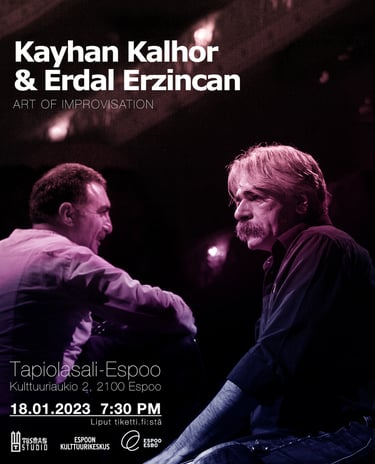
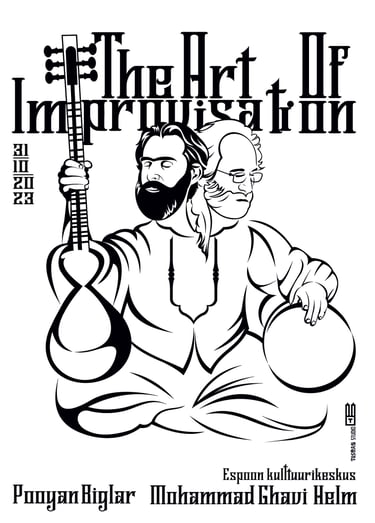
He produces and organizes concerts, public events and workshops for non-European artists from across the world in Finland
As a producer, his goal is to bring non-western music into the scene without being dependent on festivals and their economy and representations.
TEXTS
Abstract
Dissemination of World music and its vast span of accessibility might at first seem as a sign of diversity and global unity that is to be celebrated. However, to categorize music as World music is to utterly split it into the dichotomy of “ours” and “others”. It perpetuates the hegemony of Western music as standard and natural, and it puts other kinds of music in a position where they are consistently compared to Western music. Therefore, even if World music is marketed and branded with concepts like diversity and unity, in reality, what it achieves through a complex system of representations is exotification and oversimplification of non-Western music. Such a portrayal perpetuates the inferiority of non-Western music and preserves a static image of it. Thus, as a result, the professional encounters of Western musicians with world music tend to remain reductive and superficial.
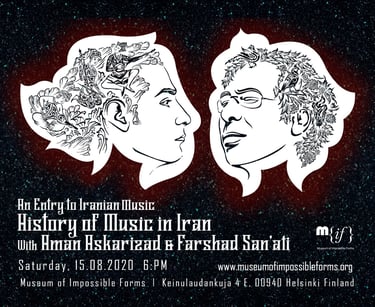
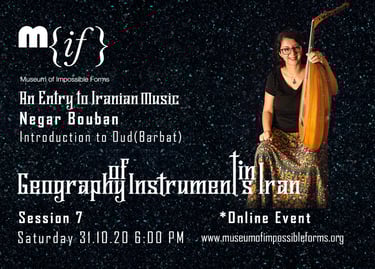
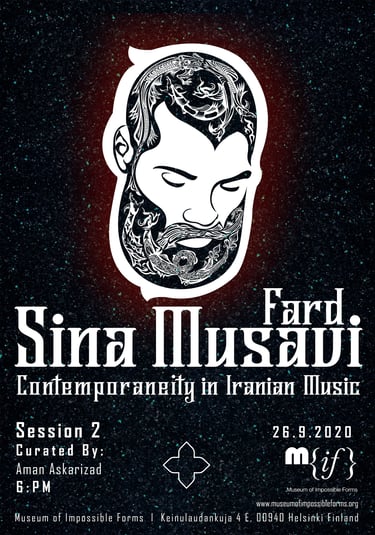
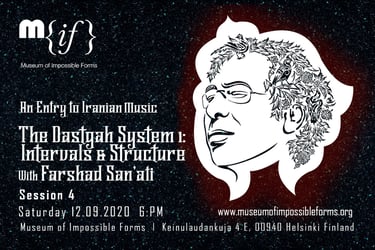
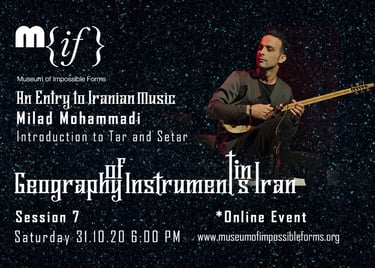
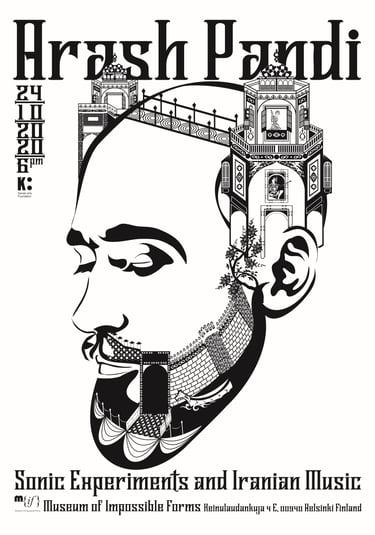
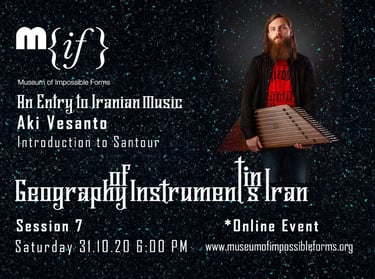
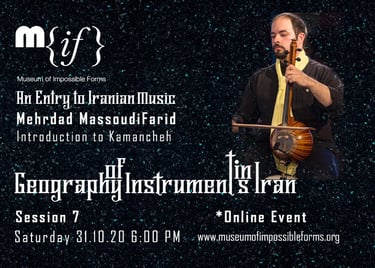
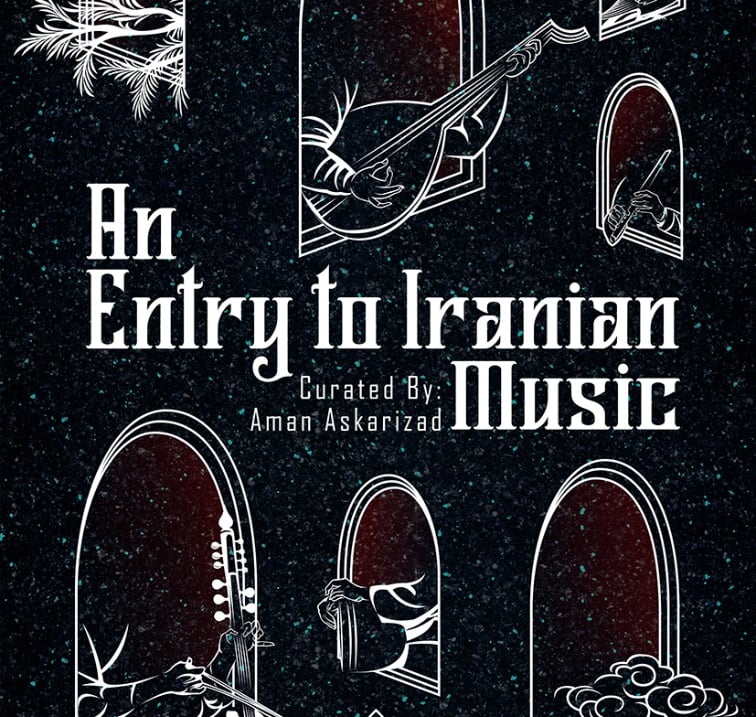
This thesis is an endeavor to uncover the politics of representation in World music and to suggest a more equal approach to encountering other musical cultures. The theoretical part of the thesis refers to Orientalism as the underlying root to the existing cultural representation systems and tracks it back by locating its foundations in anthropology and colonialism. The text also looks at ethnomusicologists’ involvement in representing non-Western music and the impact of global capitalism in creating the label of “world music”. The part based on the curated sessions of this thesis illustrates the curatorial project — An Entry to Iranian Music — an eight-session workshop and lecture, as a practical suggestion for encountering non-Western musical systems. The text reveals the intentions and necessities for including different subjects in the project and their importance in understanding and acknowledging the complexity of Iranian music as an independent musical system and briefly reporting the events and their content.
Keywords: Politics of Representation, World music, Orientalism, Iranian music, Persian Classical music, Ethnomusicology, Encounters, exotification
In this chapter, co-authored with Kim Ramstedt, we examine the structural conditions that force marginalized musicians into "internalized orientalism" within the western capitalist music industries. Moving beyond conscious self-exotification, we analyze how the global market naturally embeds orientalist discourses into the self-perception and cultural production of Middle Eastern artists. Using Mentrix's music video 'Walk' as a case study, we demonstrate how the Eurocentric neoliberal framework denies true artistic freedom to the global majority. It ultimately demands conformity to exoticized and politicized tropes, leaving forced activist stances as the only alternative to market exclusion.
Music, Research, and Activism
Prospects and Projects in Northern Europe
Editors: Kim Ramstedt , Susanna Välimäki, Kaj Ahlsved and Sini Mononen
Published by Intellect - 2025
Chapter 4. Internalized Orientalism in the Western Capitalist Organization of Music
Aman Askarizad and Kim Ramstedt